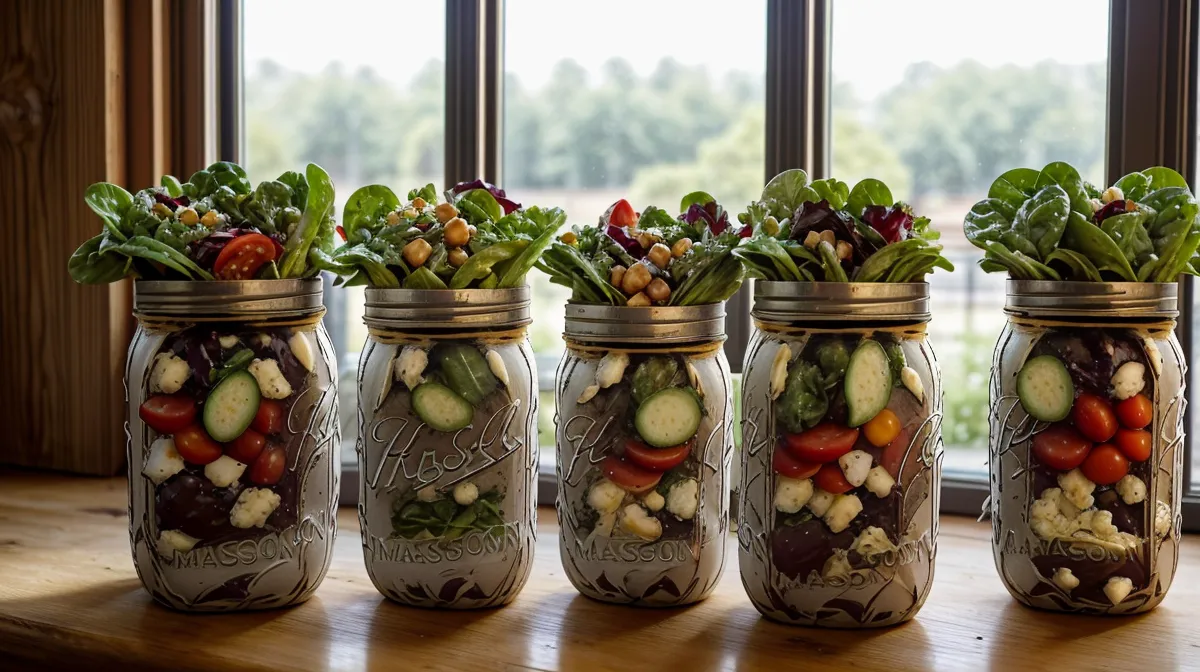
Eleven. That's roughly how many gray, slimy, ruined mason jar salads I dumped straight into the trash before I figured out how mason jar meal prep was supposed to work for an actual postpartum healthy lunch, not just in theory. Before the jars, I'd tried one of those clean eating meal plans, the kind with a shopping list of ingredients I could never actually find at Jewel-Osco, and I gave up on it inside of a week.
Here is the thing: people ask me about this mason jar salad setup constantly. A friend down the street, the one who runs a neighborhood book club that rotates through a different basement every month, asked me almost this exact question before her last meeting. So instead of one long story about my slow mason jar glow-up, here are the actual questions I get, answered straight, no highlight reel.
How Long Do Mason Jar Salads Actually Stay Fresh?
This is the one everyone wants answered before they buy a single jar. Packed the right way, hearty mason jar salads hold their crunch for about five days in the fridge. I build five at once instead of doing this every single day, which is really the whole batching trick. I've pulled a Friday lunch that was built the Sunday before and it still had that snap when the fork hit glass. These aren't freezer meals, either, so don't expect freezer-style math — a mason jar salad is a five-day fridge situation, not a five-week one, and treating it like the freezer is how people end up disappointed.
Stop Putting the Dressing at the Bottom
The first time I tried the standard method, I opened the lid to a jar of gray, slimy arugula that smelled like cheap balsamic vinegar gone wrong. That's what convinced me the popular advice needed an asterisk. Dressing on the bottom works fine sitting still on a counter. It does not work when that jar tips over in a bag on the way to school drop-off, and dressing works its way up through everything before lunch.
So here's my actual fix: keep the dressing in a small leak-proof container and set it on TOP of the jar, tucked right under the lid, instead of the bottom. It still measures out to the standard two tablespoons per serving, so I'm not eyeballing it. If the jar tips now, the only casualty is my bag.
The Jar Size That Actually Matters
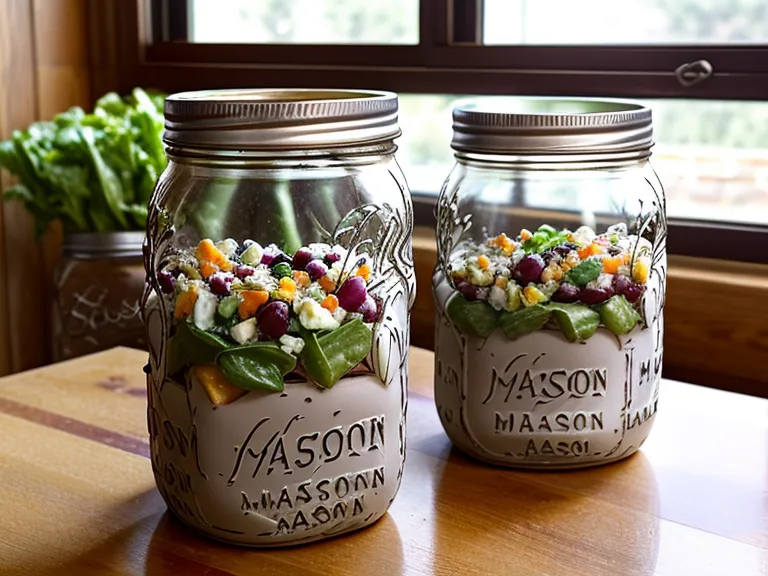
Size questions come up almost as often as the dressing question. I use quart-sized, wide-mouth jars — the 32-ounce ones — because that's enough room to pack in real volume without it turning into a rabbit's lunch, and because a regular-mouth jar turns "grab a fork and eat straight out of the jar" into a small emergency.
Glass matters more than people expect, too. It doesn't hold onto smells or stains the way my old plastic containers did — half of those had lids that needed two hands and a muttered bad word just to snap shut, so good riddance to them. The jar that had a spicy dressing in it Monday doesn't taste like anything but glass by Thursday.
What Goes in Which Layer?
Layering is the real engineering problem here, and it's simpler than it looks. The bottom holds whatever can survive some humidity without turning to mush — chickpeas, sliced carrots, cucumber. I grab most of that produce during a weekly run to the ALDI on 75th Street in Naperville, since it keeps the grocery total from creeping up. Those act as a floor. The middle layer is for softer stuff — bell peppers, hard-boiled eggs, leftover chicken — and the protein in that layer is doing double duty, since it's what actually keeps me full past lunchtime instead of circling back to the pantry an hour later. Greens go on top, and they have to be bone-dry, because a damp leaf against the jar wall does the same damage dressing at the bottom does — it'll ruin the whole thing by Wednesday.
Real Meal-Prep Questions I Get About This
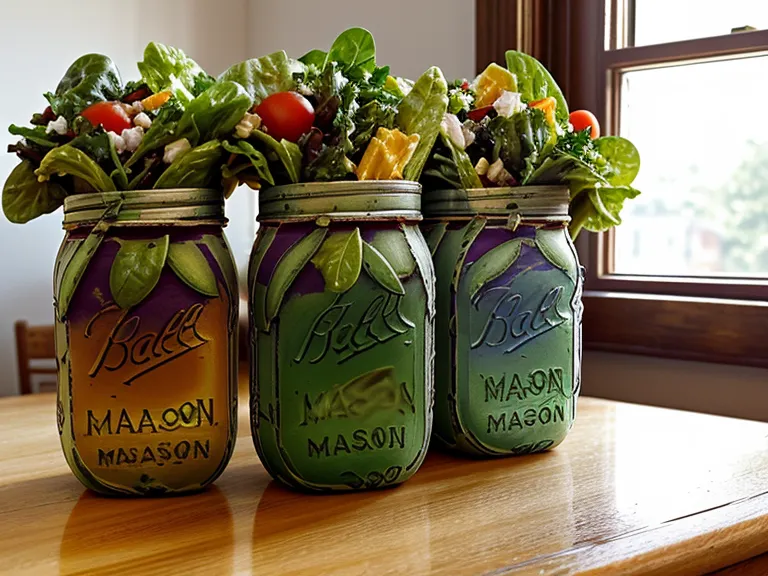
Okay so, a few more things come up over and over. Let's just knock them out.
This isn't basically another restrictive diet. That's actually the difference between cutting things out cold turkey and just changing what's easiest to reach for, which I get into more in the piece about how I started gluten free meal prep for more energy. This is just what's already in the jar when I'm hungry, not a rulebook.
This isn't a diet plan. It's more of a delivery system for whatever I'm already trying to eat. Some days that leans on Mediterranean diet meal prep ideas, other days it's just whatever produce didn't go bad first.
Having lunch ready affects cravings and energy. The biggest shift wasn't sugar cravings vanishing or some burst of energy. It's that I stopped raiding the pantry out of stress the second the kids started melting down. Half of what feels like a 2pm crash is really just not having had enough water since drop-off, not an actual energy crisis.
Supplements and shakes. Nothing added: no powder, no pill, nothing shaken up in a bottle. Just food in a jar, which is honestly the most skeptical I've gotten about anything marketed as a shortcut since having kids.
Physical differences. Less bloated, less foggy by mid-afternoon, though I couldn't tell you the mechanism and I'm not going to pretend I can. I just know a jar of real vegetables sits better than crackers eaten standing over the sink between school runs.
Does This Actually Move the Needle on Energy?
This is the question underneath all the other questions, so here's the honest version. I'm not going to tell you a jar of salad fixes postpartum metabolism or melts anything — that's not how any of this works, and I'd be lying if I said otherwise.
There was a Target dressing room mirror one afternoon where I actually stood there and looked, instead of doing my usual flinch away. Nothing dramatic happened. I just didn't look away, which was new.
My three-year-old interrupted this exact paragraph, if you're curious, to ask why the jars are see-through, and I didn't have a better answer than "so I can tell if I did it right."
If you only take one thing from all of this, take the layering order and the dressing swap — that's what actually determines whether Thursday's lunch is crisp or garbage. Everything else is just details, and some days I still get it wrong anyway.